.svg)

.svg)
Executive Summary: Innovate Without the Risk For the modern Chief Information Officer (CIO) and Chief Technology Officer (CTO), the insurance technology landscape presents a false dichotomy. On one side, legacy core system providers offer entrenched stability but are notoriously slow, expensive, and inflexible. On the other side, "modern core" competitors aggressively sell structural, monolithic replacements, forcing a full "rip-and-replace" of the existing core. This approach represents a massive, high-risk, multi-year project for any established insurer, creating significant organizational friction and a long sales cycle.
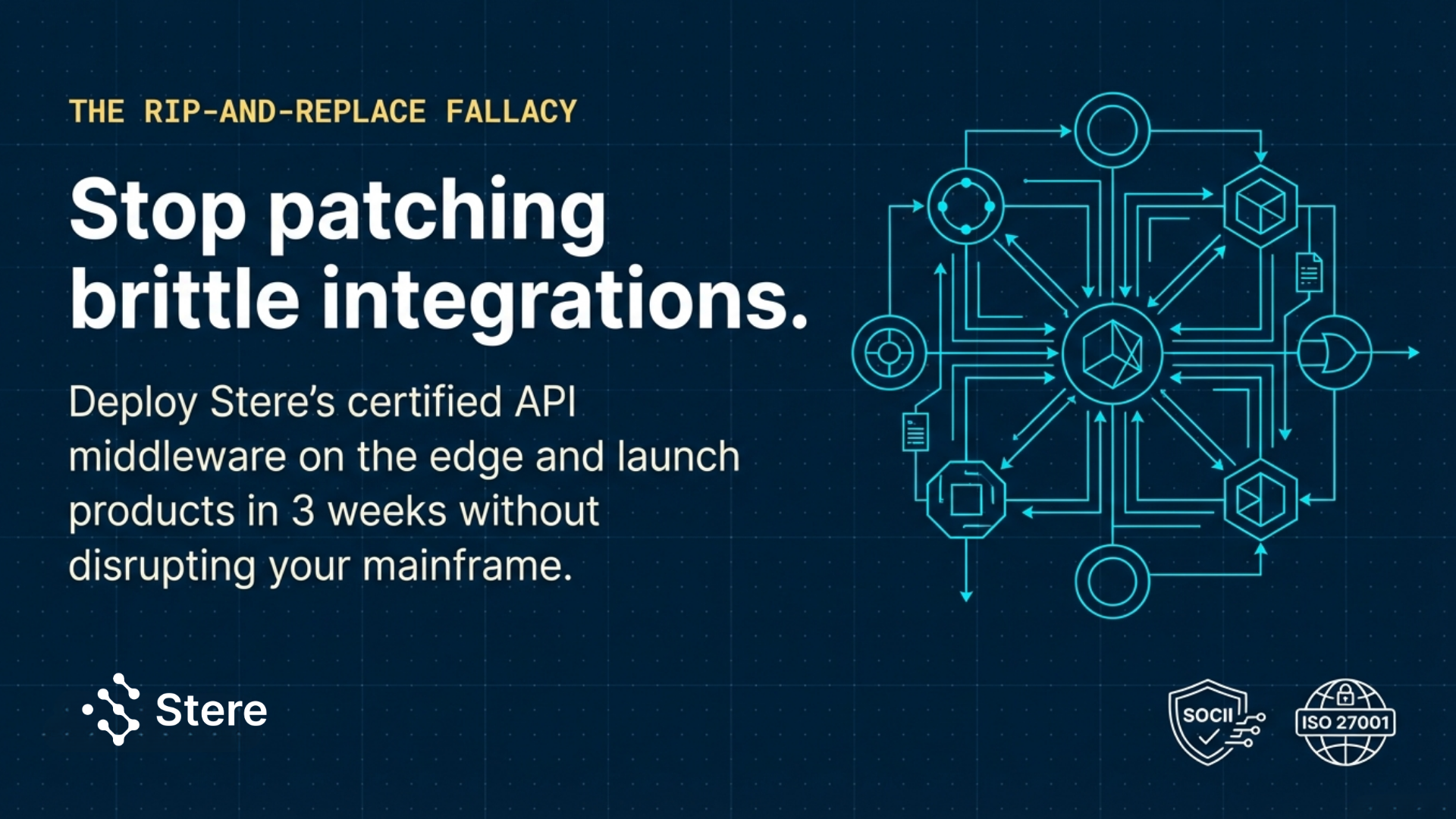
There is a third path. You can escape the "rip-and-replace" paralysis. By deploying our middleware on the edge, you can launch new digital products in weeks without disrupting your mainframe. This solution brief details how Stere’s API-first platform enables strategic co-existence, allowing your enterprise to innovate instantly while feeding data seamlessly back to your system of record.
The Brittle Technical Debt Trap
The mandate for the CIO and CTO is clear: drive digital transformation, reduce IT operational costs, and build a modern, scalable architecture. However, the reality of executing this mandate is fraught with peril. The innovator is trapped by technical debt. Outdated legacy systems are a constant drain on resources, consuming up to 70% of the IT budget just for maintenance.
Worse still, the pressure from the business to deliver new capabilities often forces IT teams into a corner. To connect a myriad of internal and external systems—brokers, wholesalers, API aggregators, digital platforms and AI initiatives—teams resort to costly and slow custom development projects. These point-to-point integrations are brittle, not reusable, and create an unmanageable technical debt trap.
Every new distribution partner requires a slow, expensive, and bespoke IT integration project. While your team patches these brittle, custom integrations, your competitors are leveraging API-first architectures to scale effortlessly. The fear is real: relying on a rigid, monolithic architecture creates a lack of agility that will soon render your entire tech stack obsolete.
The Fallacy of Rip-and-Replace The traditional vendor response to this brittle architecture is a complete core replacement. However, the thought of a "rip-and-replace" project is a non-starter for the CIOs due to the immense risk, cost, and time involved. A typical product deployment on a legacy system can take 9-12 months and cost $2-5 million in licenses, not including high payroll costs. Full replacement carries significant migration and business disruption risk.
Carriers and MGAs buy infrastructure and flexibility. They have legacy constraints and cannot afford a "rip-and-replace" project. They need connectivity, not replacement. Their goal is "co-existence"—running new digital products alongside their old core.
Strategic Co-Existence: The Middleware PaaS
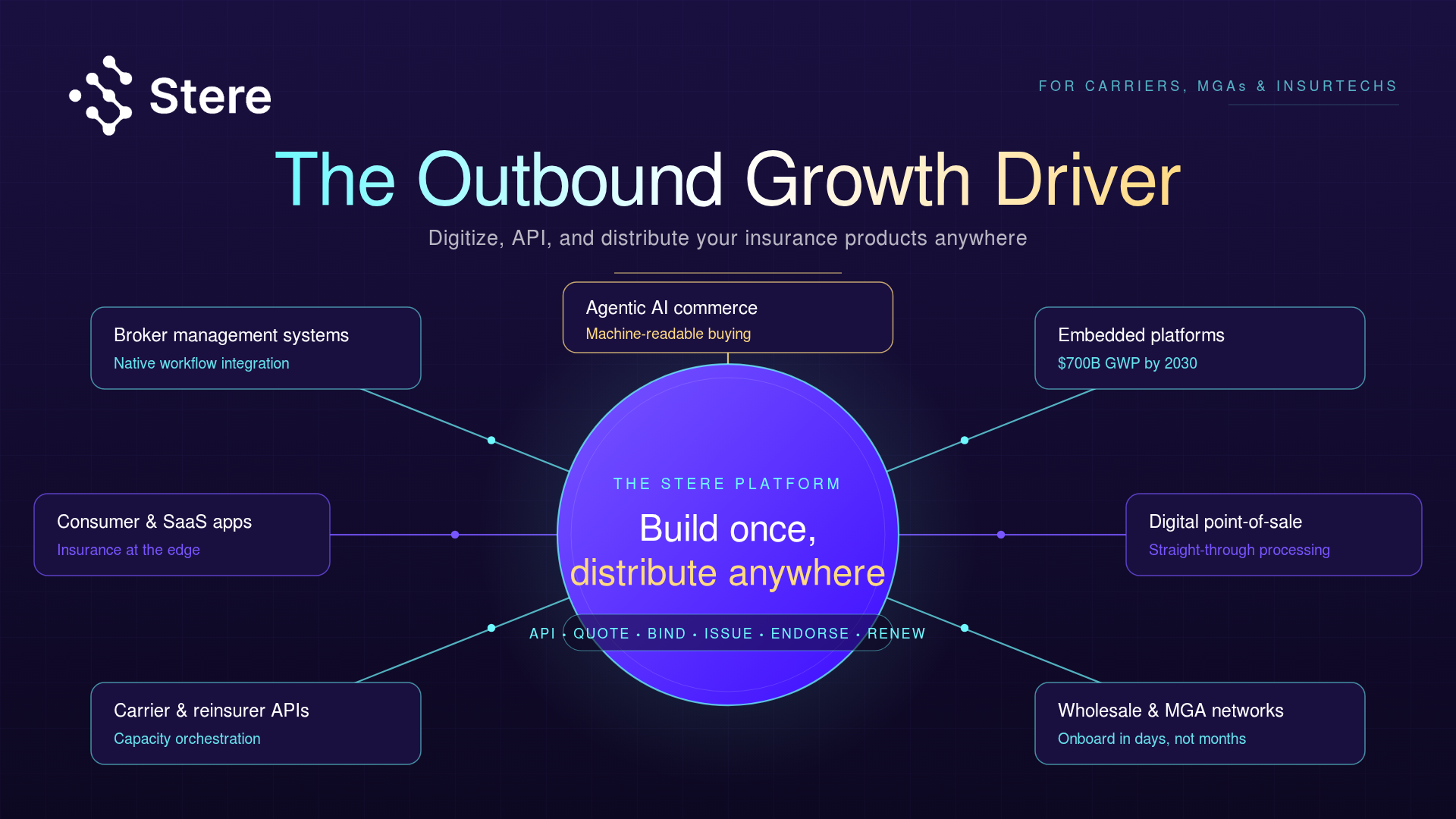
Stere is the API-first middleware that bridges your legacy core with the digital world. We provide an agile Middleware layer. We don't demand a risky "rip-and-replace" of your legacy core. Instead, we wrap around it, providing the modern microservices and API infrastructure you need to launch digital products and connect with partners, while your system of record remains secure and untouched.
This is the essence of Stere: The Insurance PaaS. To you -a CIO or CTO, "PaaS" implies a set of tools (APIs, SDKs) they can control. It tells them, "We are an API-first layer that your developers can use to build custom products or integrations without disrupting your main core". It sounds less like a vendor lock-in and more like an innovation toolkit.
Stere's platform has a unique and deliberately engineered capability: it can "co-exist with your current legacy system" and provide a "data feed" back into it in real-time. This allows insurers to quickly launch new digital products, test new markets, and integrate with strategic partners in a safe, sandboxed, yet enterprise-grade environment.
Architecting for Value: Feature, Benefit, and Outcome
To truly understand the impact of deploying Stere’s middleware on the edge, we must translate our technical architecture into strategic business outcomes for the CIO and CTO.
Preparing for the Autonomous Future: Agent-to-Agent (A2A) workflows
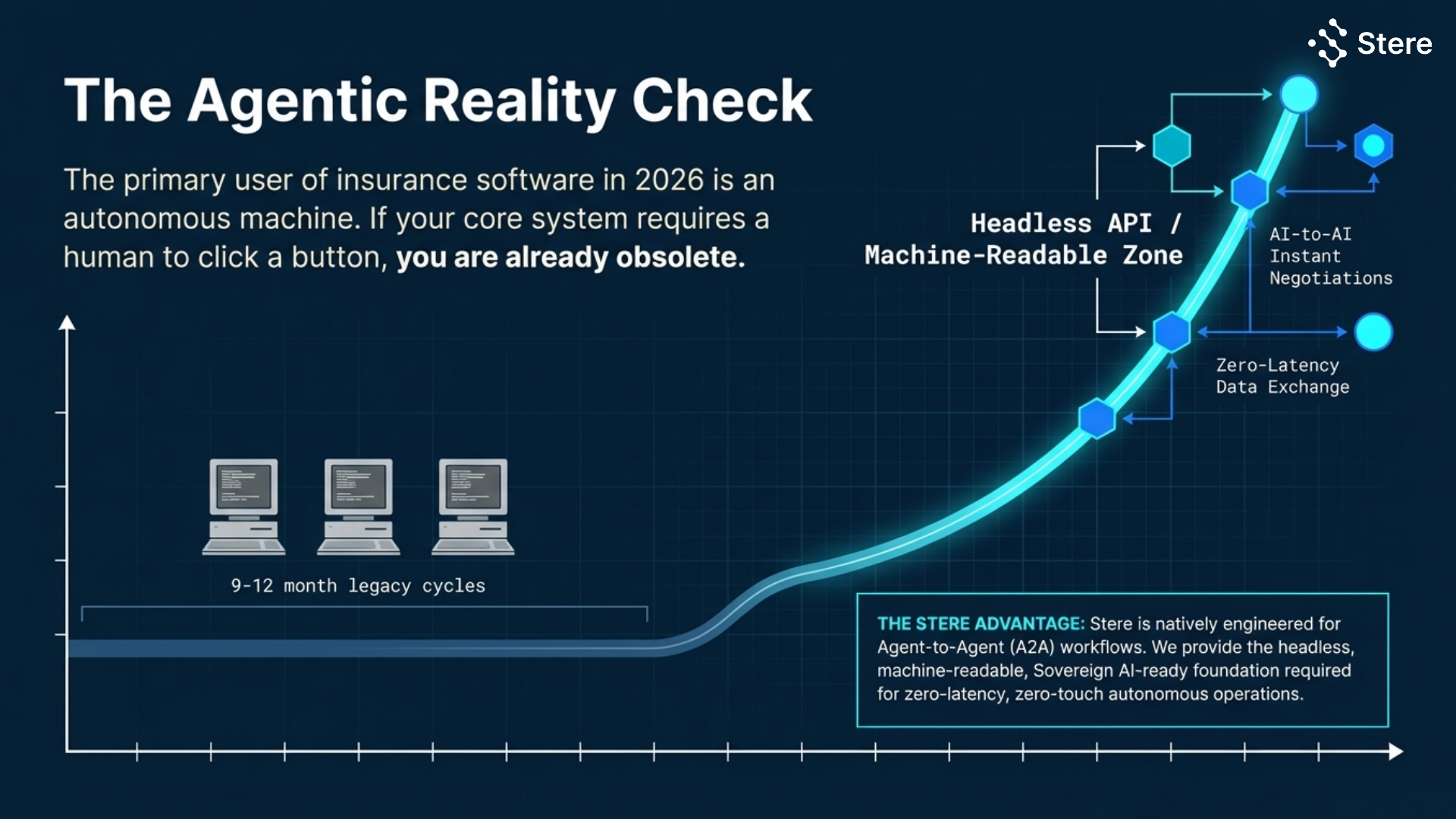
The urgency for this architectural shift goes beyond current multi-channel distribution needs. The primary "user" of insurance software in 2026 is an autonomous machine. If your core system requires a human to click a button, you are already obsolete.
Legacy and "modern core" competitors are still building "better screens" for human underwriters. Stere is the headless, machine-readable middleware engineered specifically for the autonomous operator. By deploying Stere on the edge today, you are laying the foundation for Agent-to-Agent (A2A) workflows. Stop patching brittle, custom integrations. Stere’s un-opinionated, certified API suite provides the secure, Sovereign AI-ready foundation for your autonomous future.
Conclusion Your legacy core isn't just an IT problem; it's a business growth problem. It's costing you more than just maintenance fees—it's costing you market share. The choice is no longer between stagnation and a multi-million dollar core replacement.
Stere Platform lets you innovate now, launching new products and connecting to new channels without the multi-year risk of a rip-and-replace. Liberate your data, free your developers, and cut your total cost of ownership by up to 6x. It's time to re-invest in the future, not the past. Deploy middleware on the edge, eliminate your integration debt, and achieve true strategic freedom.
.svg)
Copyright © 2024. All Rights Reserved